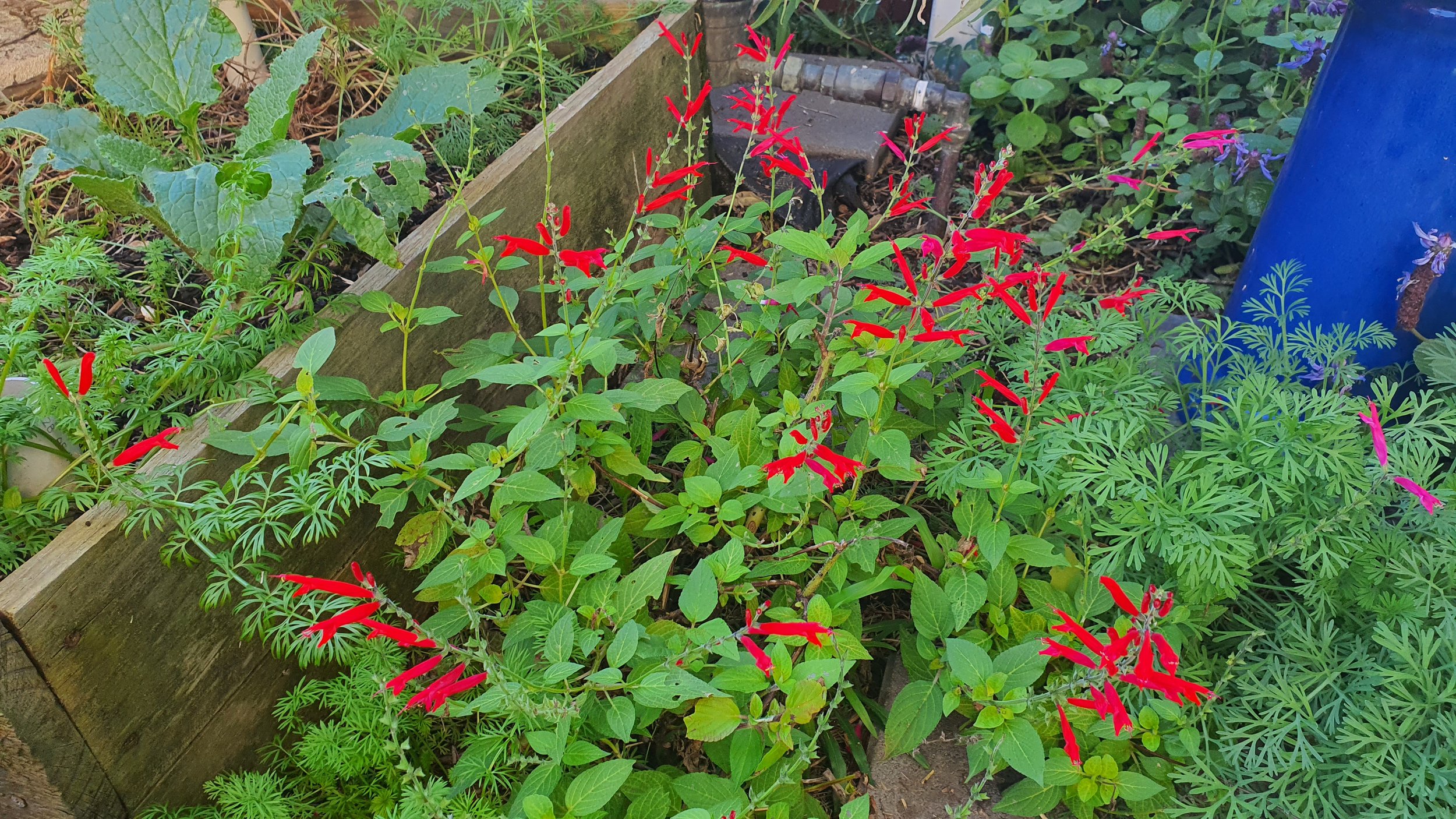
Pineapple Sage is one of those plants that earns its place in the garden in so many ways. Its soft, lime green leaves smell just like fresh pineapple. And in autumn, it bursts into bloom with brilliant scarlet-red flowers that insects and birds love.
Native to Mexico, Salvia elegans inhabits pine-oak forests at elevations between 1,800 and 2,700 metres, which gives us a sense of its resilience. In Australian gardens it adapts well across a wide range of climates, from the cool tablelands of Victoria and New South Wales to the subtropical warmth of Queensland.
If you’re sensitive to smells, this is a great way to include some fragrance in your garden. Unlike some aromatic herbs that can be sharp or medicinal, the pineapple scent is sweet and clean. The leaves remain scented all year, and crushing them releases the fragrance.
Pineapple sage was used extensively in early traditional medicine by Indigenous Mexicans, who valued it for treating anxiety and high blood pressure. It also has genuine culinary appeal: the leaves have a pineapple fragrance and must be used fresh, as cooking destroys the scent. They work well in cold drinks such as fruit punch and iced tea, and in fruit salads.
If you're on a budget, this plant is a great investment. Cuttings take root easily, and a single purchased plant can quickly become many. It's also a generous wildlife plant, attracting butterflies, bees and honeyeaters when in flower.
Plant info
Botanical name: Salvia elegans
Common names: Pineapple Sage
Family: Lamiaceae
Type: Herbaceous perennial / subshrub
Origin: Mexico and Guatemala
Height: 1.2–1.5 m
Spread: 0.7–1 m
Uses: Herb garden, ornamental border, cottage garden, pots, edible garden, wildlife garden
Flowering time: Spring through to autumn, most prolifically in autumn as the nights lengthen
Flowers: Tubular, bright red, two-lipped flowers held in whorls of 6–12 at the tips of the stems
Growing notes
Light: Full sun to partial shade. In warmer climates, some afternoon shade in summer will reduce wilting on hot days.
Water: Requires regular watering and may wilt on hot days if water is lacking. Mulch well to retain moisture.
Soil: Prefers well-draining loamy soil that retains some moisture without becoming waterlogged. In pots, use a quality potting mix and ensure good drainage.
Care: Deadhead spent flower stalks to encourage more blooms. In frost-prone areas, cut back hard at the start of winter and it will reshoot from the base in spring. In frost-free areas, a hard prune in late winter keeps the plant shapely. Feed with a balanced liquid fertiliser during the growing season.
Propagation: Cuttings take root easily and will be ready for planting out in the warmer spring weather. Established clumps can also be divided. A perlite/vermiculite mix produces strong roots quickly; keep it consistently moist.
Pineapple Sage Teacake Recipe
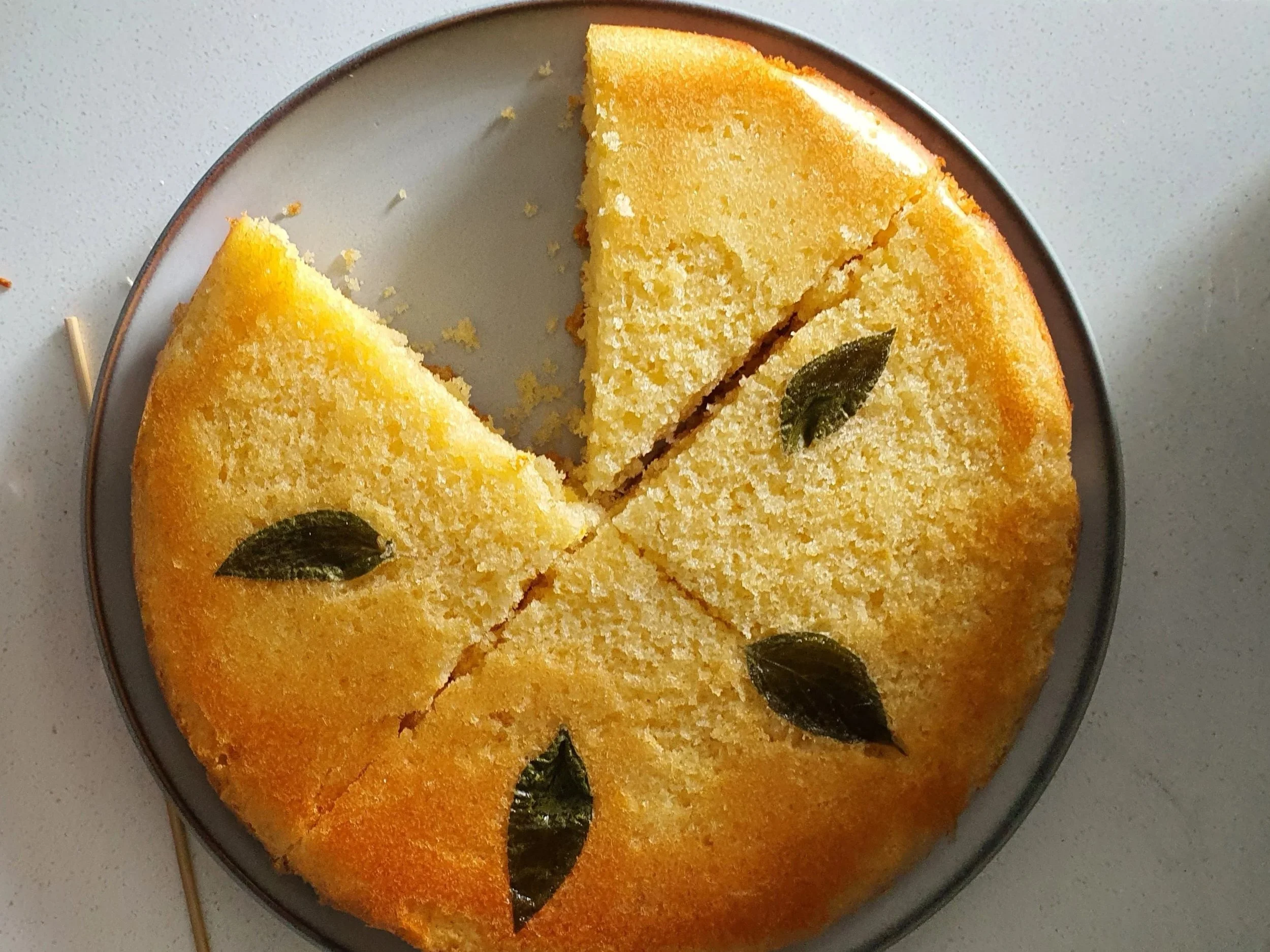
Adapted from the salvia queen Meg Bentley’s Fruit Cup Sage Tea Cake recipe
Ingredients
3 large eggs
150g castor sugar
150g softened butter
150g self raising flour
2 teaspoons lemon zest
4 or 5 leaves of Salvia elegans (wash and gently pat excess moisture with paper towel)
Beat eggs then add castor sugar and other ingredients, mixing gently to combine then beat on high until smooth and creamy.
Line base of 20cm cake tin with baking paper and place the cleaned leaves in a pattern across the base. Make sure that the top surface of the leaves are facing the baking paper and the undersides with the veins are closest to the cake mixture.
Cover with the cake mix and place in a 180 degree oven, bake for 35-40 minutes.
Allow to cool in the tin before inverting it onto a cake plate.
Serve with the syrup and a dollop of natural Greek yoghurt.
Syrup
¾ cup water
¾ cup castor sugar
2 shaved strips of lemon peel (without the pith)
6 Salvia elegans leaves (washed)
Dissolve the castor sugar in the water over low heat then bring to the boil.
Add sage leaves and lemon peel and boil gently for about 5 minutes.
Allow to cool, then strain contents into a small glass jug, ready for use. Delicious served warm or cold over the cake.