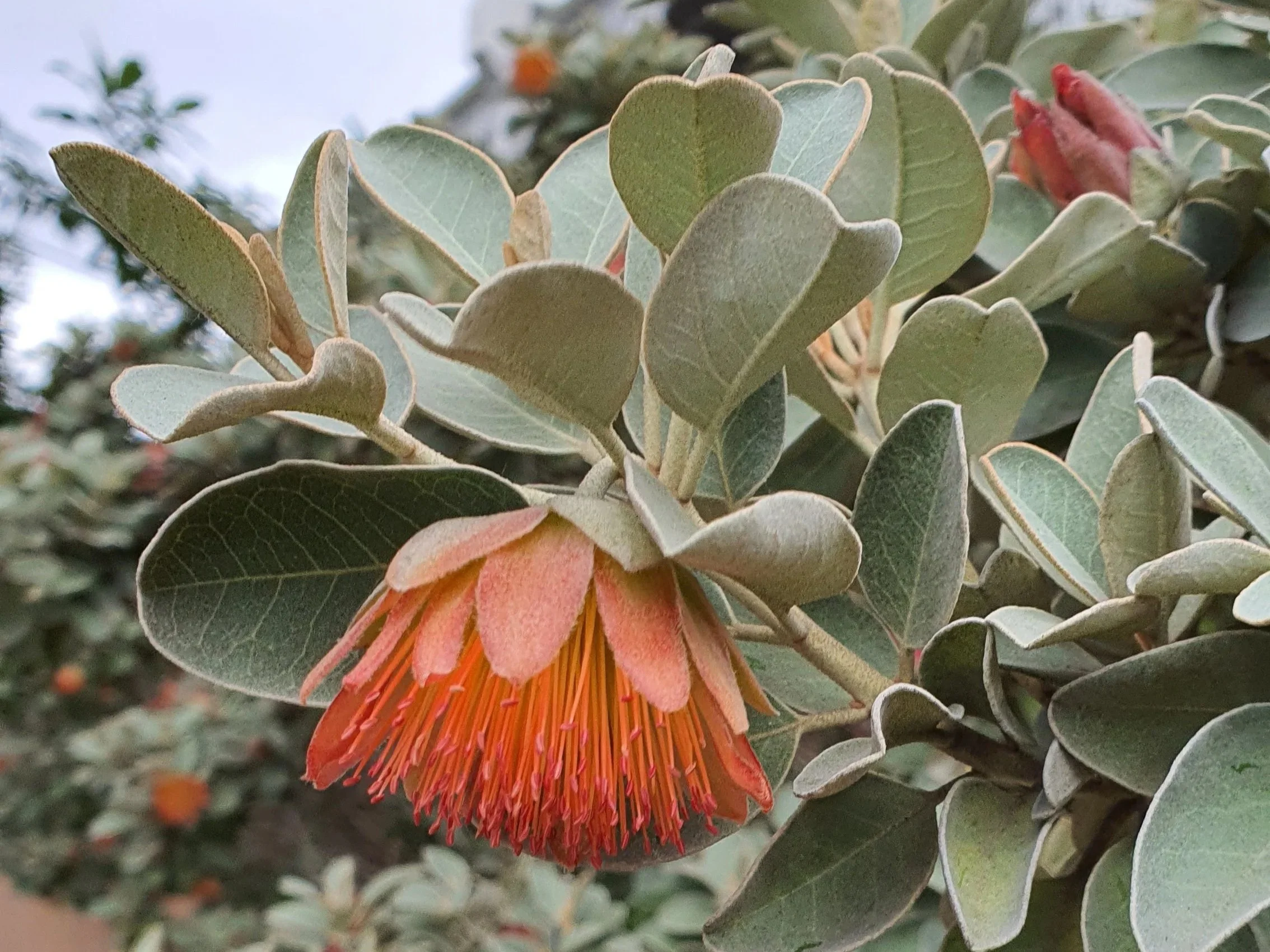
If you're looking for a native shrub that provides visual drama all year round, the Wild Rose is worth a look. It has an upright habit with soft grey-green leaves and showy flowers between late autumn and spring. The flowers dangle like little pom-poms and consist of a central cluster of red stamens surrounded by soft, papery, pinkish-red bracts.
From a sensory perspective, this is a lovely plant for tactile gardeners. The large leaves have a soft, felted texture, and there's no unpleasant scent to worry about, though some growers note a light fragrance from the flowers. It's also a fairly forgiving plant to work with, which is handy if you need something low maintenance.
Originating on limestone outcrops and coastal ridges in Western Australia, it is also well adapted to poor soils, salty winds and long dry stretches.
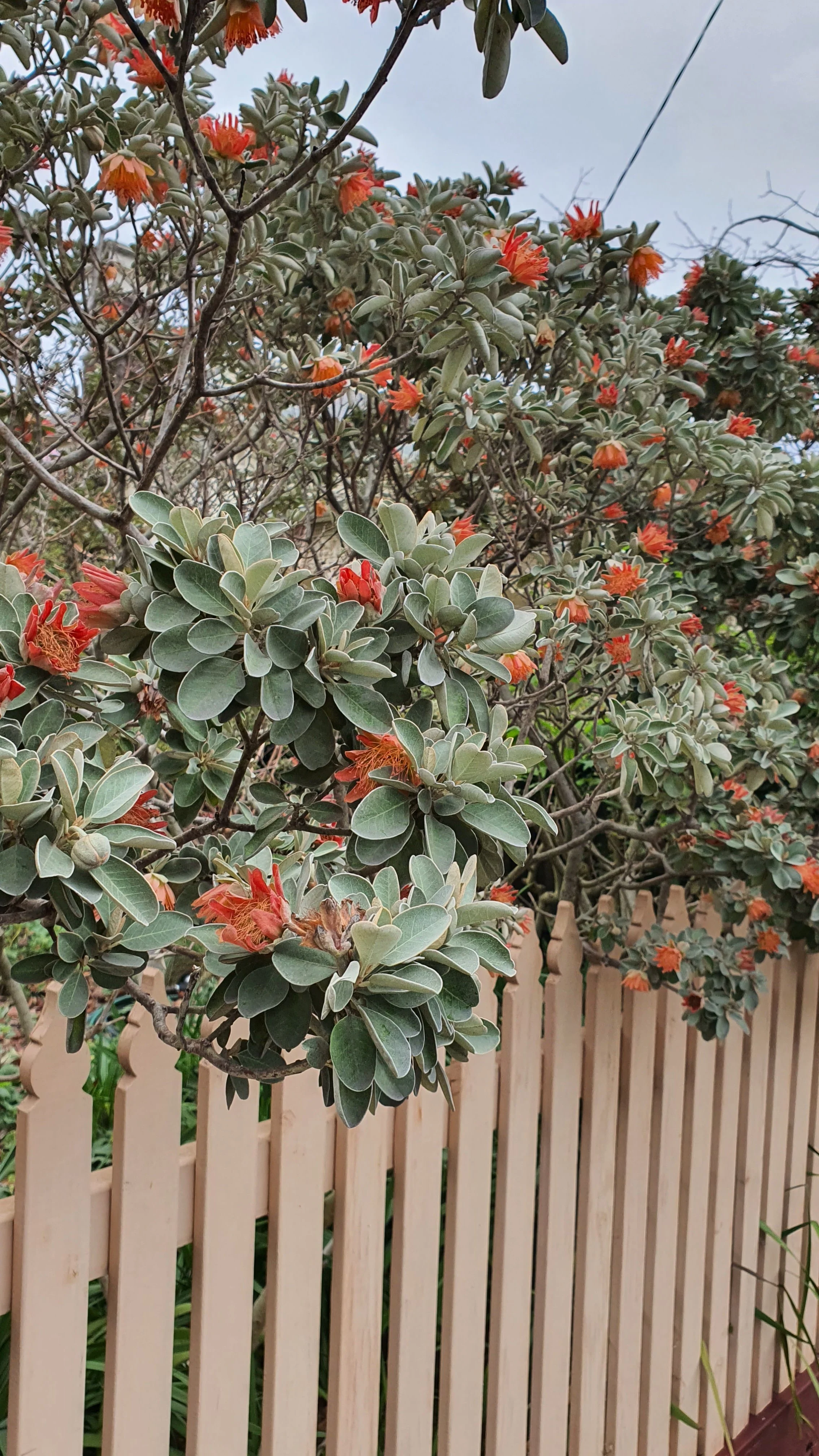

Plant info
Botanical name: Diplolaena grandiflora
Common names: Wild Rose, Wineglass Bush, Native Rose, Tamala Rose
Family: Rutaceae
Type: Evergreen shrub
Origin: Western Australia
Height: 0.5 to 3 m, though grafted forms sold for garden use are usually more compact, staying closer to 1 to 1.2 m
Spread: 1 to 1.5 m
Uses: Specimen shrub, coastal gardens, courtyards, containers, cut flowers, informal cottage-style native plantings
Flowering time: Mainly autumn through to spring, with some forms flowering nearly year-round
Flowers: Nodding, wineglass-shaped blooms with a central cluster of red stamens surrounded by pinkish-red to orange bracts
Growing notes
Light: Full sun to light or dappled shade. In hotter inland gardens, a little afternoon protection helps, but along the coast it will happily take full sun.
Water: Low water needs once established. Give it a good drink during long dry spells while it is settling in, then back off. Like many plants adapted to limestone country, it dislikes humidity and constantly damp soil, which can encourage fungal problems.
Soil: Needs excellent drainage above all else. Sandy loam is ideal, and it tolerates limestone and coastal conditions well. If your soil is heavy clay, this is one to grow in a raised bed or a large container rather than fighting the drainage battle in the ground.
Care: Genuinely low fuss once established. A light tip prune straight after flowering keeps the habit bushy and compact, but avoid hard pruning as it does not always reshoot reliably from old wood. A yearly feed with a low-phosphorus native fertiliser in spring is all it really asks for. Mulching helps keep the root zone cool and suppresses weeds, which is handy if bending and repeated weeding is uncomfortable for you.
Propagation: Best grown from grafted stock, which is more reliable, compact and widely available from native nurseries than seed-grown plants. If you do want to try cuttings, semi-hardwood tip cuttings taken after flowering can strike, though patience is needed as Rutaceae family members can be slow and a little fussy to propagate from cutting material.