How to Mulch your Garden
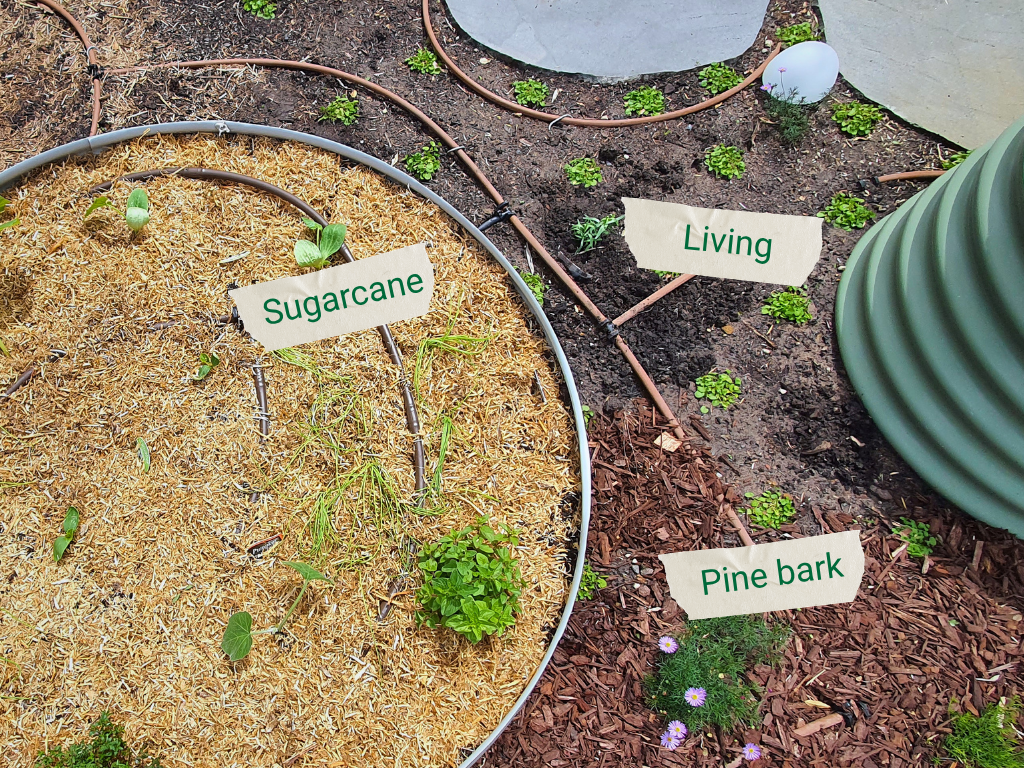
Three types of mulch in one garden: sugarcane for vegetables, living between steppers and pine bark in garden beds.
Mulch is simply a layer of material on the surface of the soil that either naturally forms from leaf litter or branches, or can be added to provide ideal growing conditions. The word comes from the German ‘molsch’ which means ‘soft’ or ‘beginning to decay’.
Why mulch
Mulching bare soil:
reduces moisture loss
protects plant roots from temperature extremes
prevents weeds germinating and spreading
adds organic matter to soil as it breaks down
unifies the look of a garden
Types of mulch
The best way to mulch is via a living mulch of low groundcovers between plants. In a vegetable garden, this can be achieved by planting herbs or flowers between your main crops.
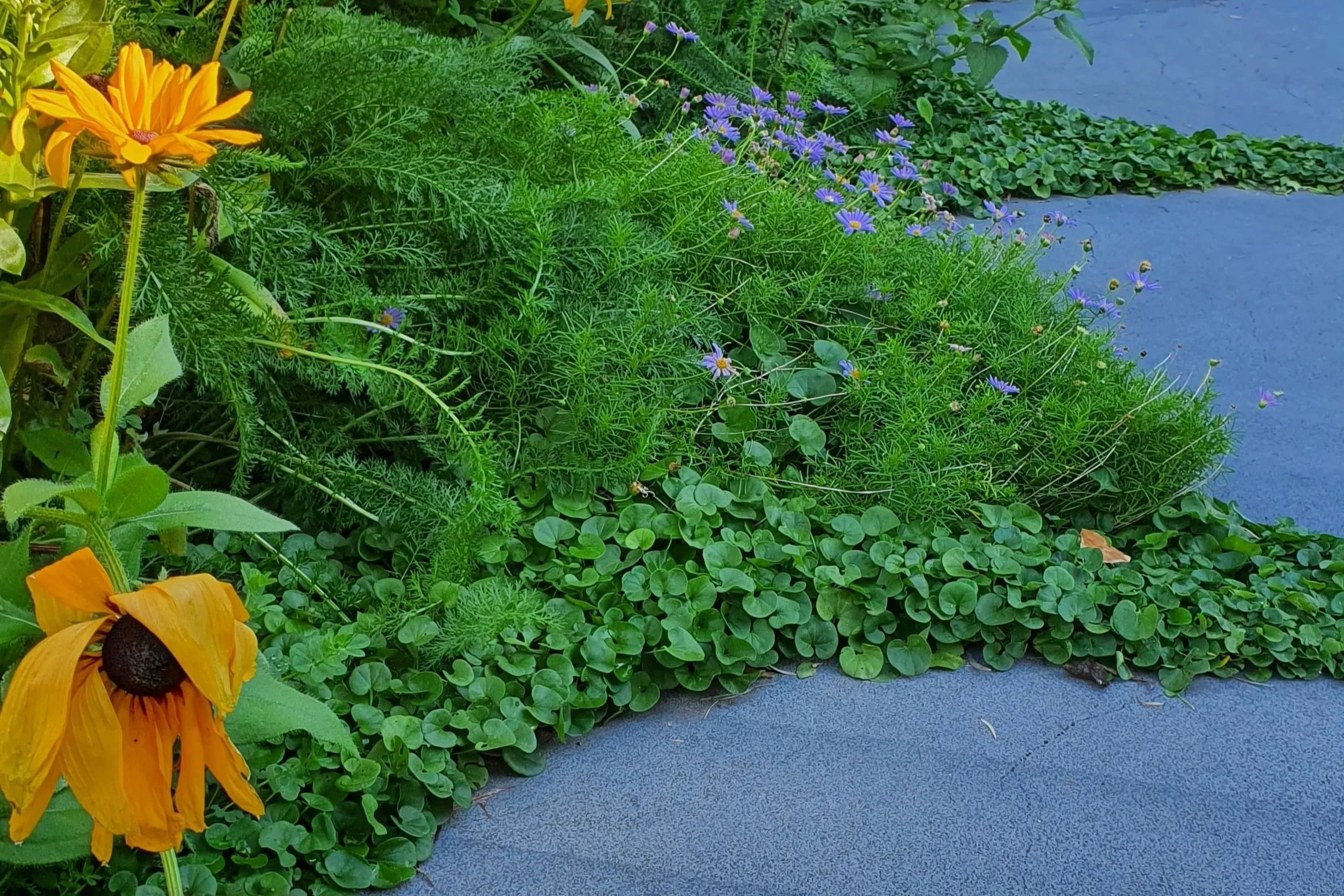
Dichondra repens growing as a living mulch between bluestone steppers and in a meadow planting
Organic mulches are made from previously living materials like pea straw, sugarcane (good for vegetables), or pine bark (good for ornamentals). Stay away from coloured pine mulch which is chemically treated, and choose a chunky particle size that allows water to get into the soil. Organic mulch will break down over time and will need to be replenished yearly. Woody mulches can cause nitrogen draw-down in the top few millimetres of soil as they decompose, so to compensate, choose a cured mulch like WhoFlungDung which contains nutrients and beneficial bacteria, or add organic sources of nitrogen.
Inorganic mulches are made from minerals and are longer-lasting than organic mulches but they will hold more heat in unshaded areas. Scoria – a porous volcanic rock – is a good option for balconies as its lightweight and won't blow around like organic mulches.
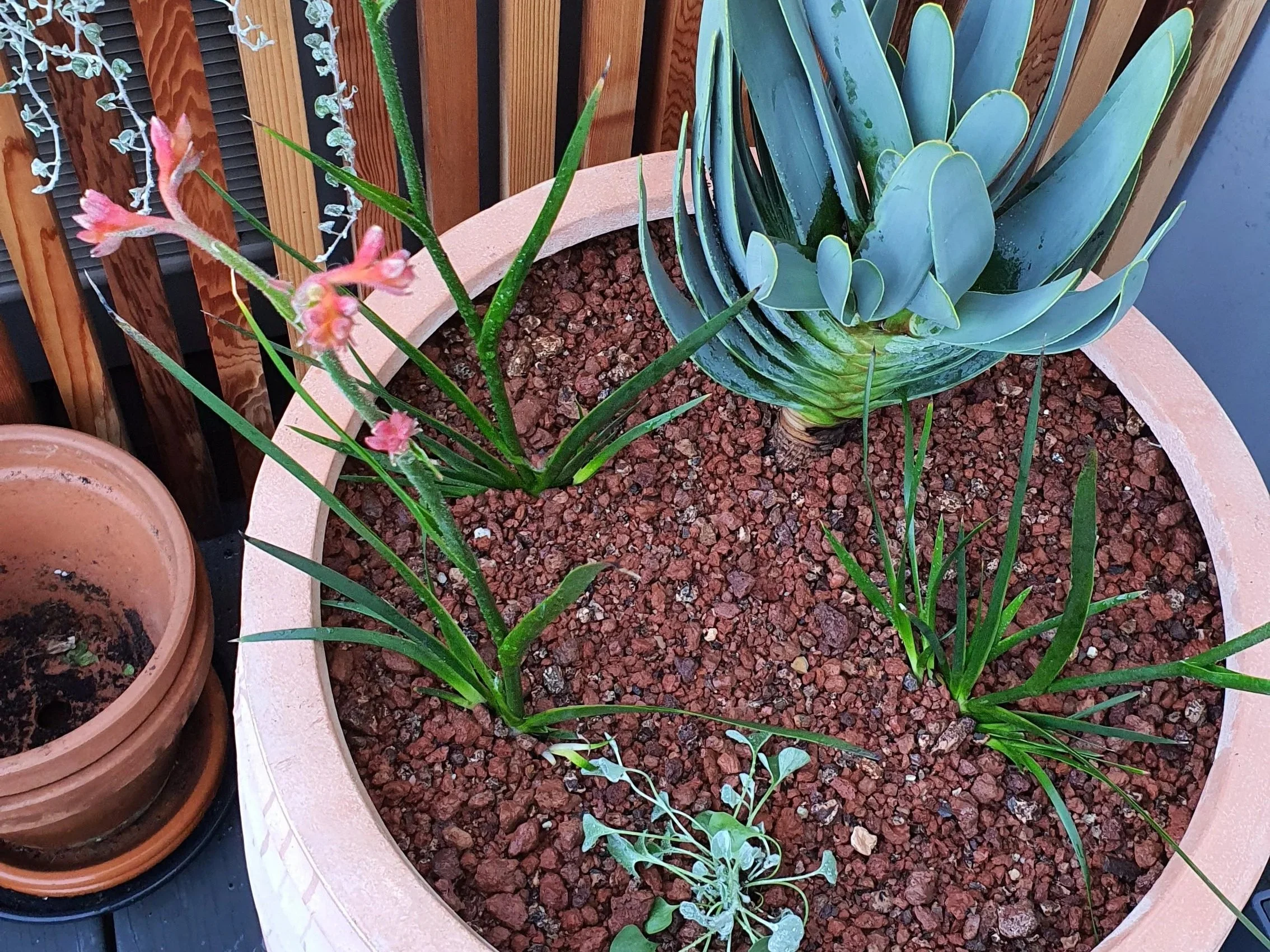
Scoria used as a lightweight mineral mulch in a pot for a balcony garden
How much mulch do I need?
The rule of thumb is to lay mulch 5-7 cm thick. This will provide the optimal level of weed suppression while still allowing water to infiltrate.
To calculate how much you need, measure the area to be mulched and multiply this by the desired thickness to get the volume. Here is a handy mulch calculator from Daisy’s Garden Supplies.
How to apply mulch
Binchy’s Garden has created this great video taking you through the process step-by-step (including how to protect your back!). The main thing to remember is to clear mulch from immediately around the base of tree trunks or stems to reduce a build-up of moisture and disease.
I need help with mulching!
If you’d like tailored advice or physical assistance with mulching, get in touch with me to see how I can help.