How to Treat Citrus Gall Wasp
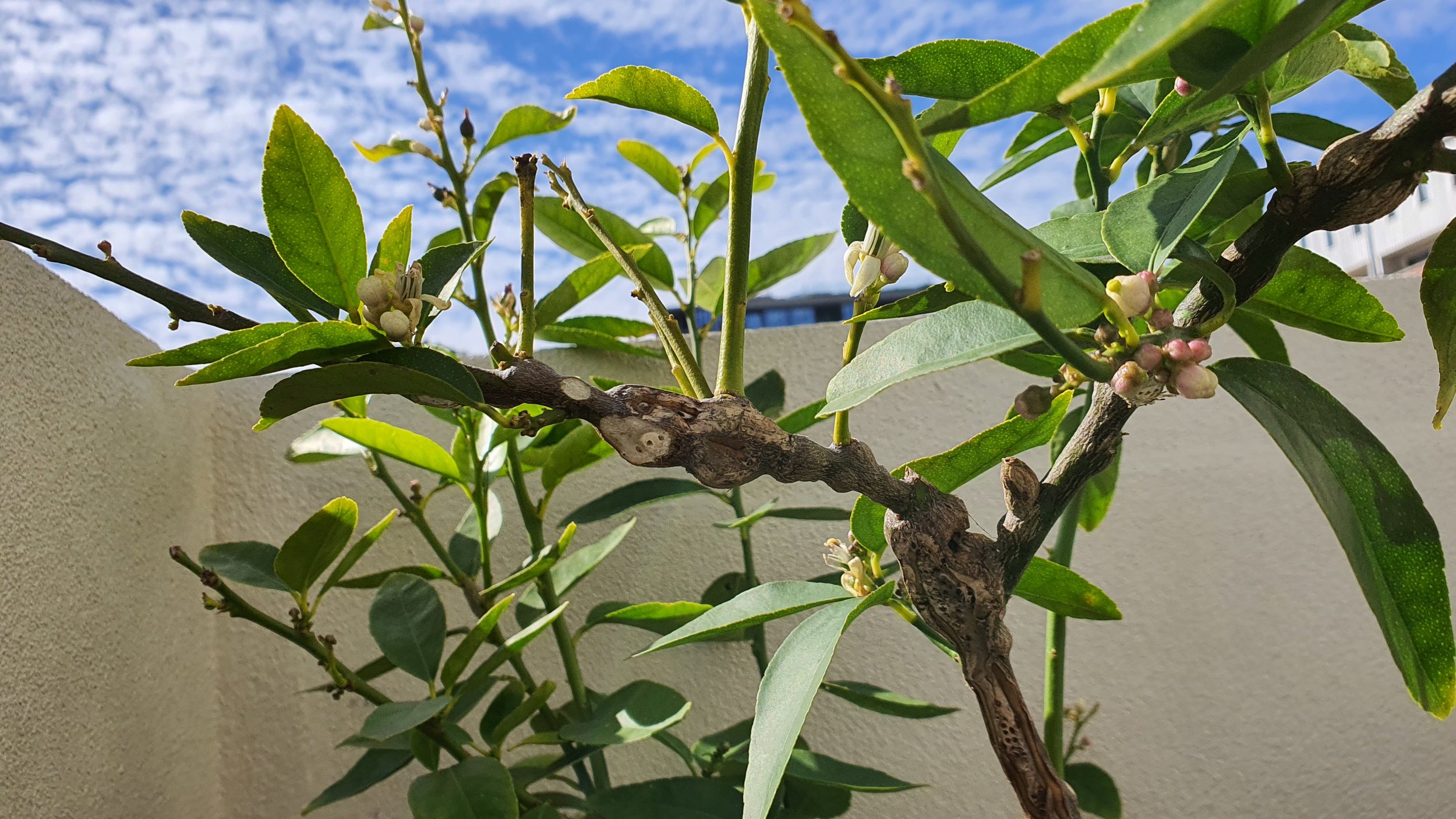
If you grow citrus in Melbourne (or anywhere in southern Australia), chances are you've come across woody lumps swelling up on the branches of your lemon, lime or grapefruit tree. This is the handiwork of the citrus gall wasp, and it's one of the most common problems for growing citrus at home. The good news is that there's a straightforward way to manage it without resorting to constant pruning or harsh chemicals.
What is Citrus Gall Wasp?
The citrus gall wasp is a tiny, shiny black insect, only about 3mm long, that's native to Australia. It originally lived on native finger limes in the country's north, but over the past century it has spread south and adapted very happily to backyard lemon, grapefruit, lime and mandarin trees. Cumquats and native limes seem to be affected far less often.
The wasp has a one-year life cycle. Adults emerge from their galls in late spring to early summer (typically late November to early December in Melbourne), and within about a week they mate and lay up to 100 eggs just under the green bark of soft, new growth. The eggs hatch a few weeks later, and the larvae feed inside the stem for the following nine to ten months. In response, the tree grows woody swellings (galls) around the infected tissue. These become noticeable from around December and keep growing through autumn and winter, before the adult wasps chew their way out the following spring and the cycle starts again.
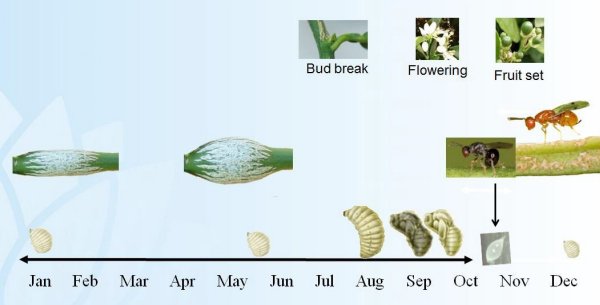
Lifecycle of citrus gall wasp. Image by Department of Primary Industries, NSW
How does it affect your tree?
The galls themselves are the tree's own defensive reaction to the wasp larvae living inside the branch. They don’t look good, and heavily infested branches can become thick, lumpy and weak. Traditional advice treats galls as a serious threat to tree health and productivity, recommending they be cut out every winter (the "Prune in June" approach) or by peeling off one side with a vegetable peeler.
However, the real-world observation and multi-year trials by Leaf, Root & Fruit tell a more reassuring story: citrus trees with a reasonable number of galls can still produce a good amount of high-quality fruit. The fruit itself is never affected by the wasp and is perfectly safe to eat. In fact, repeated winter pruning can do more harm than good, because removing branches triggers a strong flush of soft new growth the following spring, which is exactly the kind of tender tissue the wasp prefers for laying its eggs. This can lock a tree into a worsening yearly cycle of infestation and pruning.
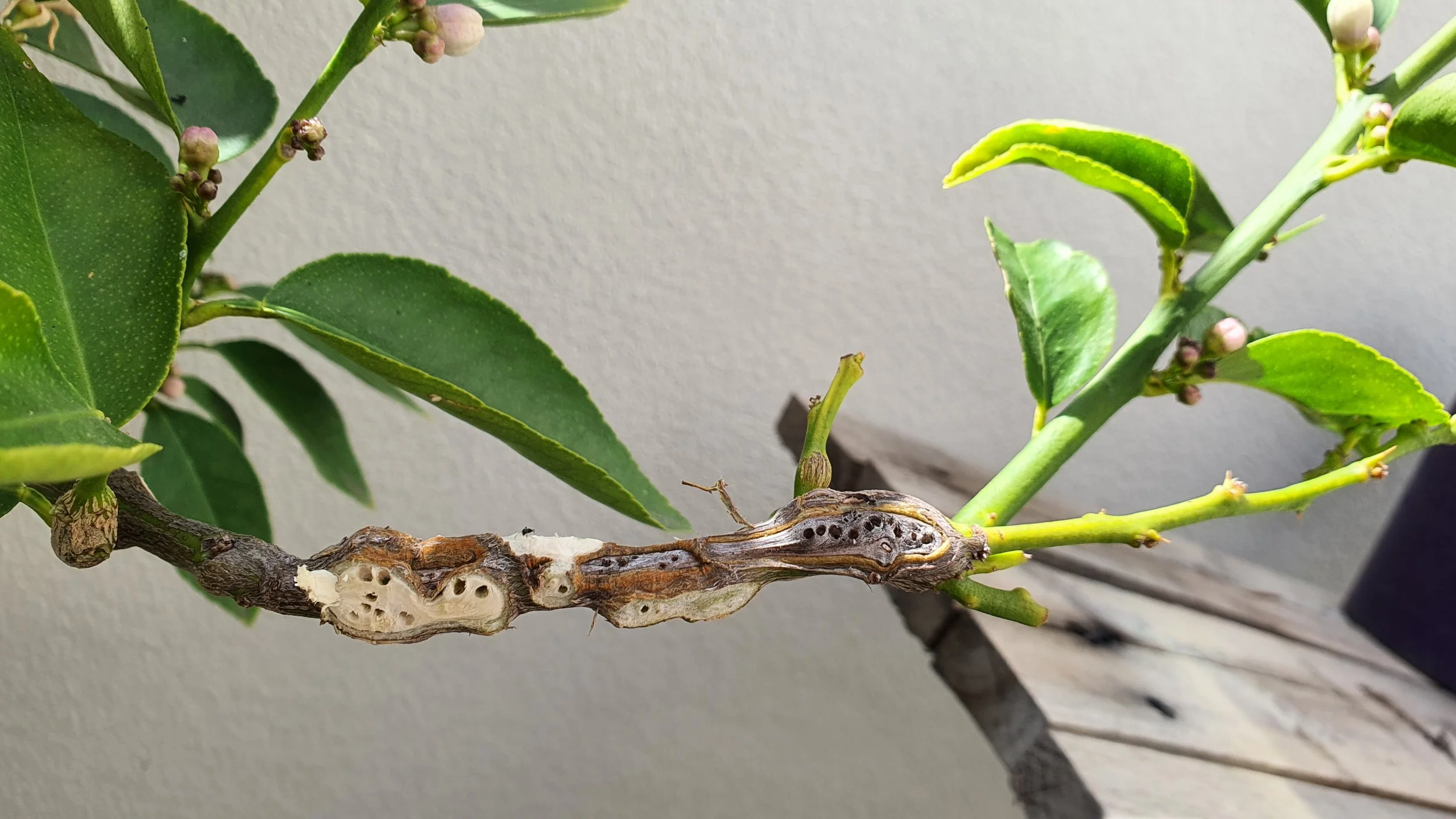
Citrus galls showing traditional treatment method with bark peeled off on one side. Holes indicate where wasps have emerged.
How to manage Citrus Gall Wasp: kaolin clay and regular fertilising
Rather than fighting the wasp by pruning every winter, this approach focuses on protecting new growth in spring so the wasps can't lay their eggs in the first place, while still feeding the tree properly so it stays productive. It's based on a treatment trialled over several years, which consistently produced the fewest galls and the best fruit yields of all methods tested (Treatment 5 in the experiment).
1. Leave the galls alone
Don't prune out or peel off the woody galls in winter. Leaving them in place avoids triggering the burst of vigorous new growth that comes from hard pruning, which is exactly the growth the wasp is drawn to.
2. Fertilise generously and regularly
Citrus are hungry plants, and cutting back on feeding to try to slow new growth ends up costing you fruit. Feed your tree monthly from September through to May using a good citrus or fruit tree fertiliser (an organic pelletised fruit and citrus fertiliser works well). As a guide, use one small handful per pot for a potted tree each month (increase the quantity for a larger tree in the ground, following the product's label rate), scattered around the root zone and watered in well straight after applying.
3. Spray with kaolin clay before the wasps emerge
Kaolin clay coats new growth in a fine white film. It doesn't kill the wasp, but it disrupts their ability to land on the stems and lay eggs, so far fewer galls form in the first place.
How to mix it: Stir about 8 tablespoons of kaolin clay powder into a small jar of water until it forms a smooth, lump-free liquid, then top this up to a total of 2 litres in your sprayer, adding more water. You want the mixture strong enough that leaves and stems turn visibly white once sprayed and dry. If the tree isn't clearly whitened, add a bit more powder.
How to apply it:
Spray the whole tree from top to bottom, covering leaves, stems and new shoots (a bit of overspray onto flowers won't harm the tree or fruit, though it may briefly make flowers less appealing to bees). A standard garden pump sprayer is fine, as the clay is fine enough to stay suspended in water. Give it a shake periodically as you spray to keep it mixed.
Time your first spray for the third week of October, ahead of when the wasps typically emerge in Melbourne (anywhere from mid-November to mid-December, depending on the season).
Repeat the spray every two weeks for a total of three to four applications, continuing until you're confident the wasp emergence period has passed (often around Christmas).
Keep an eye out for any fresh new growth that appears after a spray without any clay on it and cover it at the next application.
After rain, the clay will wash off, so you may need to reapply sooner than the two-week mark in wet weather.
Why this works
Trees managed this way have shown the lowest gall numbers and the strongest fruit production of all the approaches tested over several years of trials. In short: don't fight the tree's growth, just shield the new growth from the wasp while keeping your tree well fed.
It's a low-labour, organic-friendly approach that suits the average gardener far better than yearly pruning, and your tree will thank you with a better crop.