Plant of the month: Crinum pedunculatum
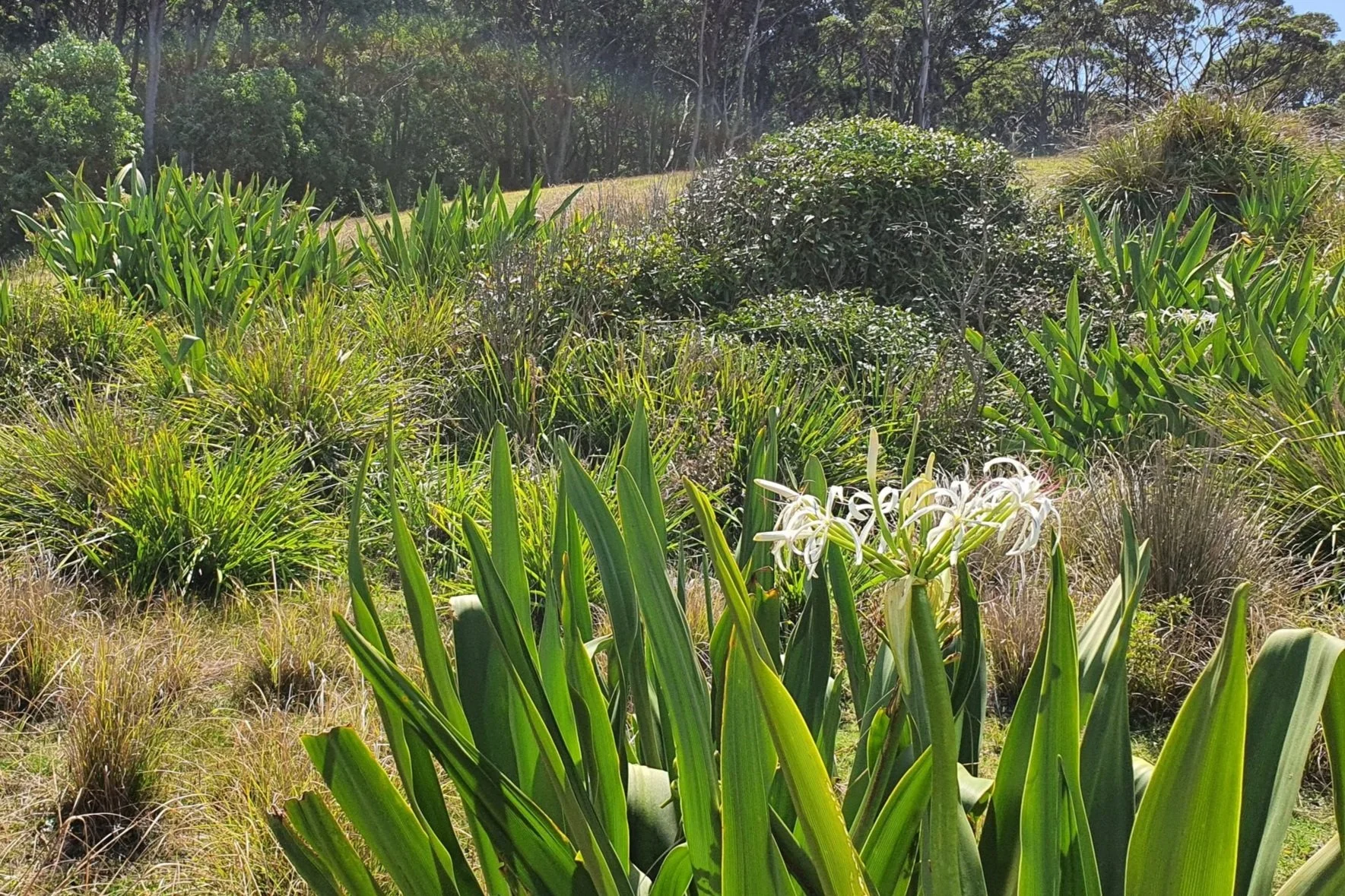
Crinum pedunculatum in its natural habitat on the NSW south coast
In the world of Australian native plants, few command attention quite like the Swamp Lily (Crinum pedunculatum). While its common name might suggest it is strictly for the boggy corners of the garden, this architectural plant is one of the most versatile and resilient lilies you can grow.
I often recommend the Swamp Lily to clients looking for a tough feature plant that doesn't compromise on beauty. With its bold, strappy foliage and spectacular crown of spidery white flowers, it brings a tropical vibe without the spikiness of a gymea lily or yucca. Whether you are dealing with heavy clay, salt-laden coastal winds, or the deep shade beneath a mature eucalypt, the Crinum typically takes it all in its stride.
Plant info
Botanical name: Crinum pedunculatum
Common names: Swamp Lily, River Lily, Spider Lily, Mangrove Lily
Family: Amaryllidaceae
Type: Evergreen bulbous perennial
Origin: Native to coastal areas of Northern Territory, Queensland, and New South Wales. Grows as far south as Melbourne.
Height: 1.5 to 3 metres (depending on conditions).
Spread: 2 to 3 metres.
Uses: Striking feature plant, mass planting for large areas, poolside or pond-side greenery, coastal gardens, and large containers. It is also an excellent choice for stabilising creek banks and is fire-retardant. Traditionally used to relieve box jellyfish stings.
Flowering time: Mid-spring to autumn
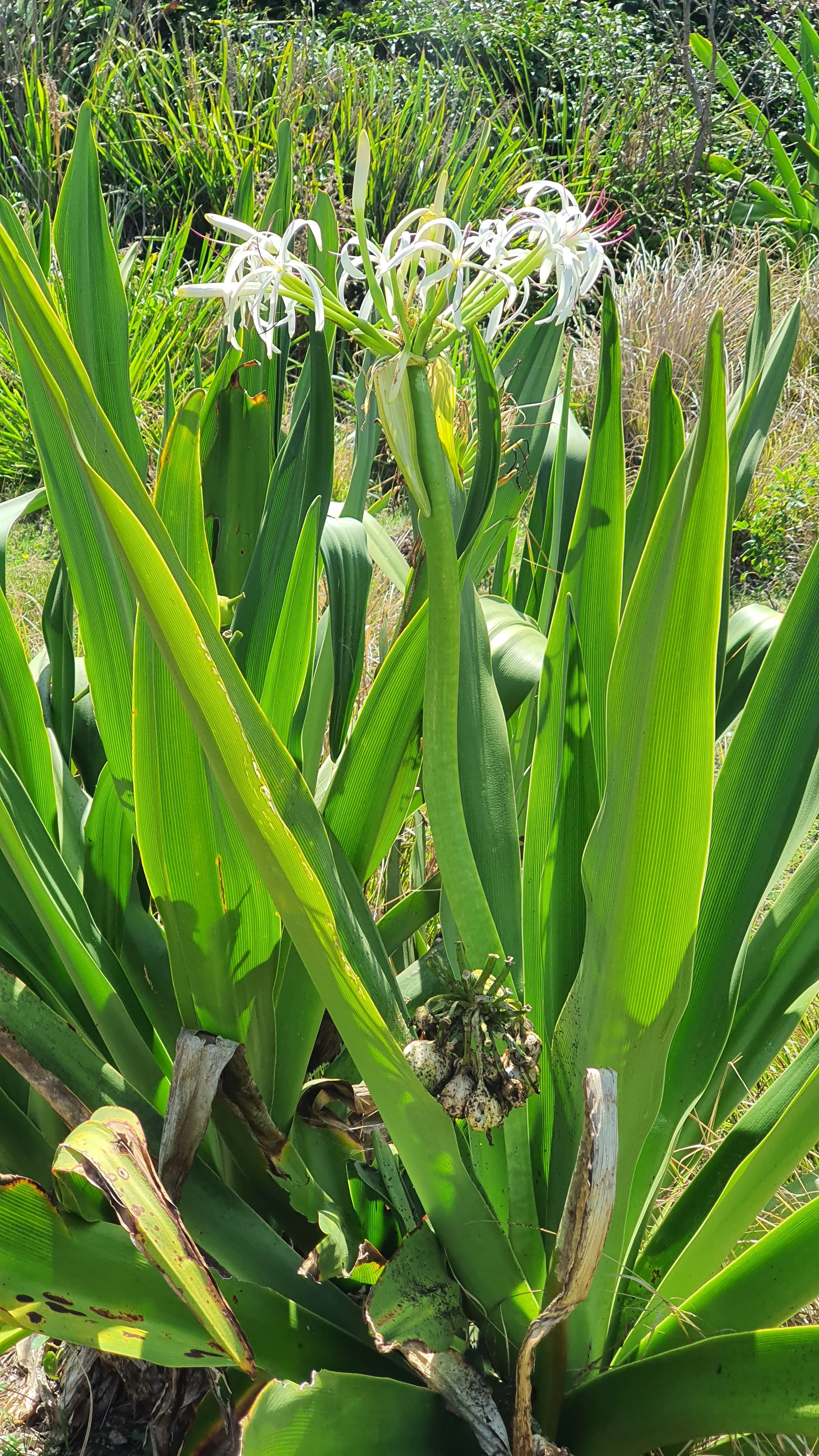
Flowers: Spectacular umbels containing 10 to 25 white, star-shaped flowers with long, elegant stamens. The blooms are sweetly fragrant, especially in the evening.
Growing notes
Light: Extremely adaptable. It thrives in full sun but is one of the few large lilies that will also flower reliably in part shade or even full shade, making it perfect for under-planting beneath large trees.
Water: While it naturally occurs in damp areas and can tolerate wet feet, it is surprisingly drought-tolerant once established. For the best flowering display, provide regular water during the hot summer months.
Soil: Prefers rich, loamy soils but is famous for its ability to grow in heavy clay, sandy coastal soils, and even poorly drained boggy spots.
Care: Generally low maintenance. Watch out for the Lily Caterpillar (Spodoptera picta), which can quickly strip the foliage; these can be managed by hand-picking or using an organic spray if an infestation occurs. Also protect from snails and slugs. Use a slow-release balanced fertiliser in early spring to encourage vigorous growth.
Propagation: Very easy to grow from its large, fleshy seeds, which often germinate while still on the plant. Simply press the seed halfway into a pot of moist seed-raising mix. It can also be propagated by carefully removing and replanting the offsets (bulbils) that form around the base of the main bulb.