Leave the Leaves this Autumn
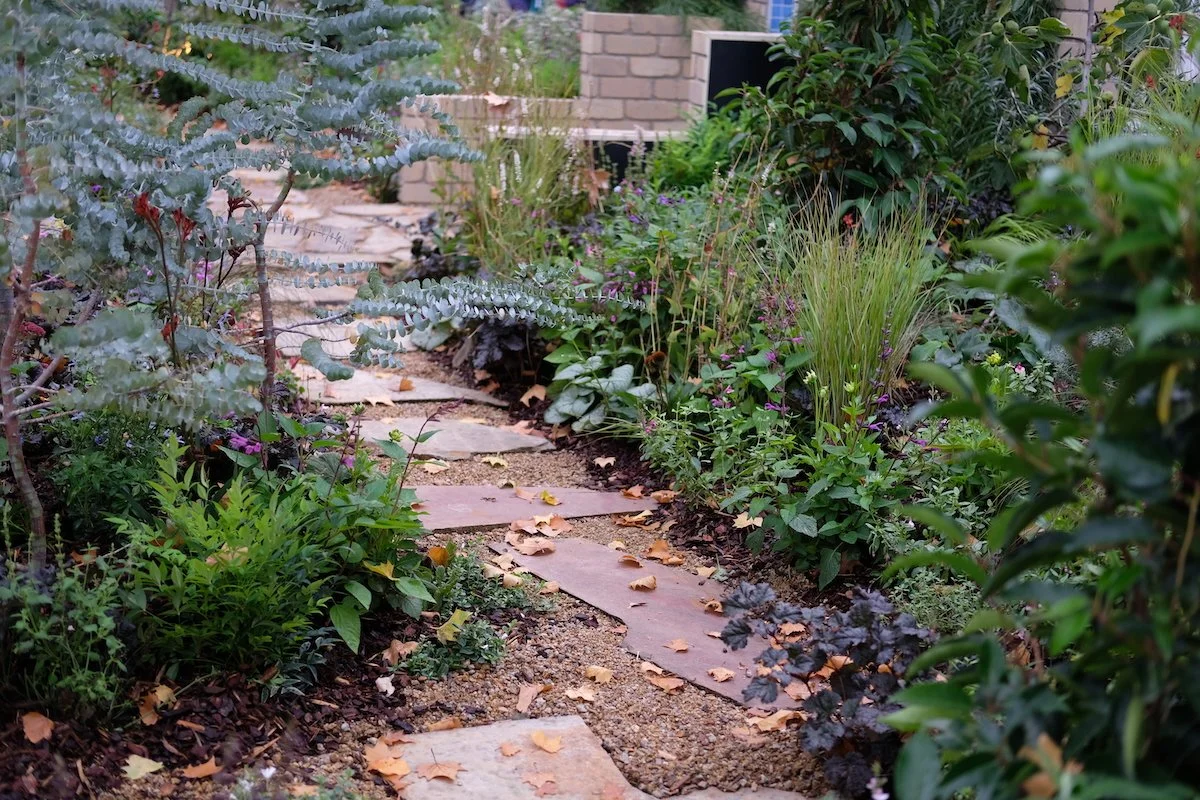
#LeaveTheLeaves is a campaign that was started in the northern hemisphere to bring awareness to the benefits of leaving fallen leaves in situ. Just because autumn leaves, flower heads and fallen branches are no longer alive, doesn't mean they aren't providing life to other creatures. Many insects rely on this material for shelter and food, and as it breaks down, it returns nutrients to the soil as well. Here are some ways you can deal with leaves sensitively this autumn:
Where possible, leave debris where it falls, or move it only slightly. There are two places I always move leaves from: gravel gardens or paths – as these surfaces require low nutrients to remain weed-free – and the crowns of other plants which can become diseased with accumulating moisture. 70% of Australia's native bees are ground-nesting (e.g. blue-banded bees), preferring open soil, so removing leaves from a small patch will help them too.
Leave flowers and seed heads. Late flowering plants like salvias provide essential food sources for insects and birds before winter-flowering natives get going. Many insects also use hollow stems for nesting, so if you really need to plants back, consider piling up stems to be used for habitat.
Make leaf mould. Bend chicken wire into a cylinder cage where leaves can decompose into leaf mould. You can also use a heavy plastic bag with holes; just add some water to help the process.
Rediscover the rake. Raking can be a meditative process, and is much kinder to creatures (including humans) than leaf blowing. If you have limited mobility, consider an electric leaf blower which is much quieter, and kinder to the wallet in a fuel crisis, than petrol-powered ones.